

Learning As I Go: Inside My Sketchbook
Line Tips, Hatching Practice, and My Banana

In March, I bought a memo pad.
I called it a sketchbook and challenged myself with certain guidelines.
You can read about my sketchbook rules and the beginning of this particular sketchbook journey here.
In today’s post, I’ll share some updates—what I’m learning, how I’m challenging myself, and some completed pages.
I’ll share the good and the embarrassing.🫢
So, let’s take a look.
We are a mother-and-son illustration team. Our drawings are hand-drawn and traced in the computer. Our goal is to help Substackers illustrate their publications with fun and simple drawings. We’re trying to restore the human creativity that is being lost from the progression of technology and AI.
Organization and Approach
As we flip through my sketchbook, you will notice that I date every drawing.
The idea is to do a little every day. I don’t try to fill a page with one drawing; I make mini drawings. Not using a timer, I suspect this exercise takes between 20 and 40 minutes, maybe more. Somewhere between 2 and 5 times a week, I’m drawing in my sketchbook.
As I pick subjects, themes have developed. Without much intention, I have created pages around motifs.
Have a look at my “Sheep and Goats” page.
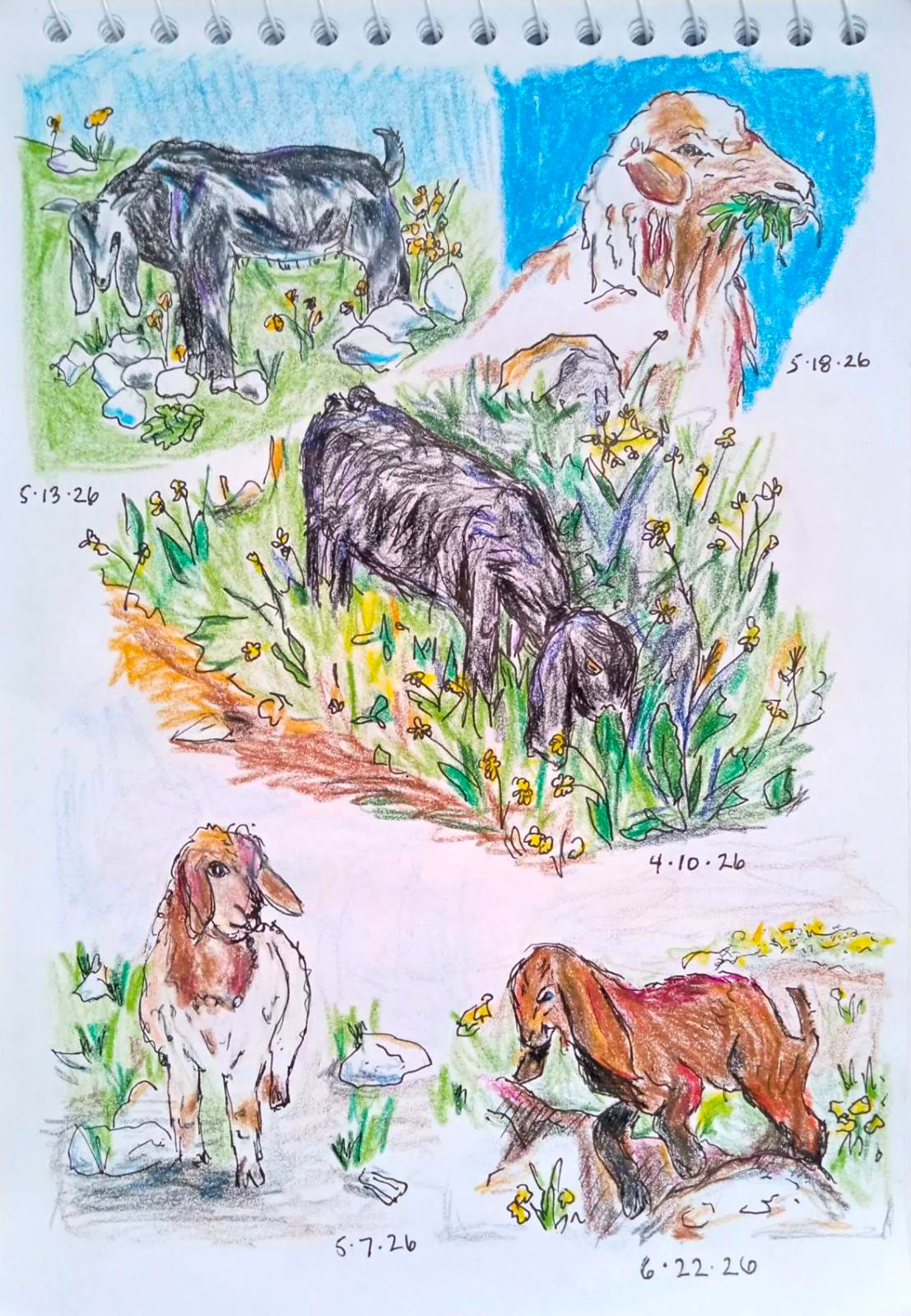
All of these drawings were of sheep and goats that I have encountered while walking in my small town. The shepherds are very patient with me when I take pictures. 😊
No Pencils, No Erasers, No Problem
If you read my first article, you know that the first rule that I set for myself was “No pencils and no erasers.”
In giving up erasing, I have learned some workarounds.
1. Plot Points
When using a pen, you can plot points. The points can be used to figure out the angle, length, and curve of a line before committing to making one. Once the line is drawn, the point disappears, leaving a well-planned line.
2. Make the Right Line
Sometimes lines don’t look quite right. They are off just a little or even a lot. When you make the wrong line, you can fix it by making the right line. The wrong line can serve as a guide for the correct one.
When the right line is in place, the wrong one will hardly be noticed. Our minds make adjustments when viewing art; we see what we are supposed to see.
My Banana
Art isn’t just about carefully placed lines. It’s about feelings and connections.
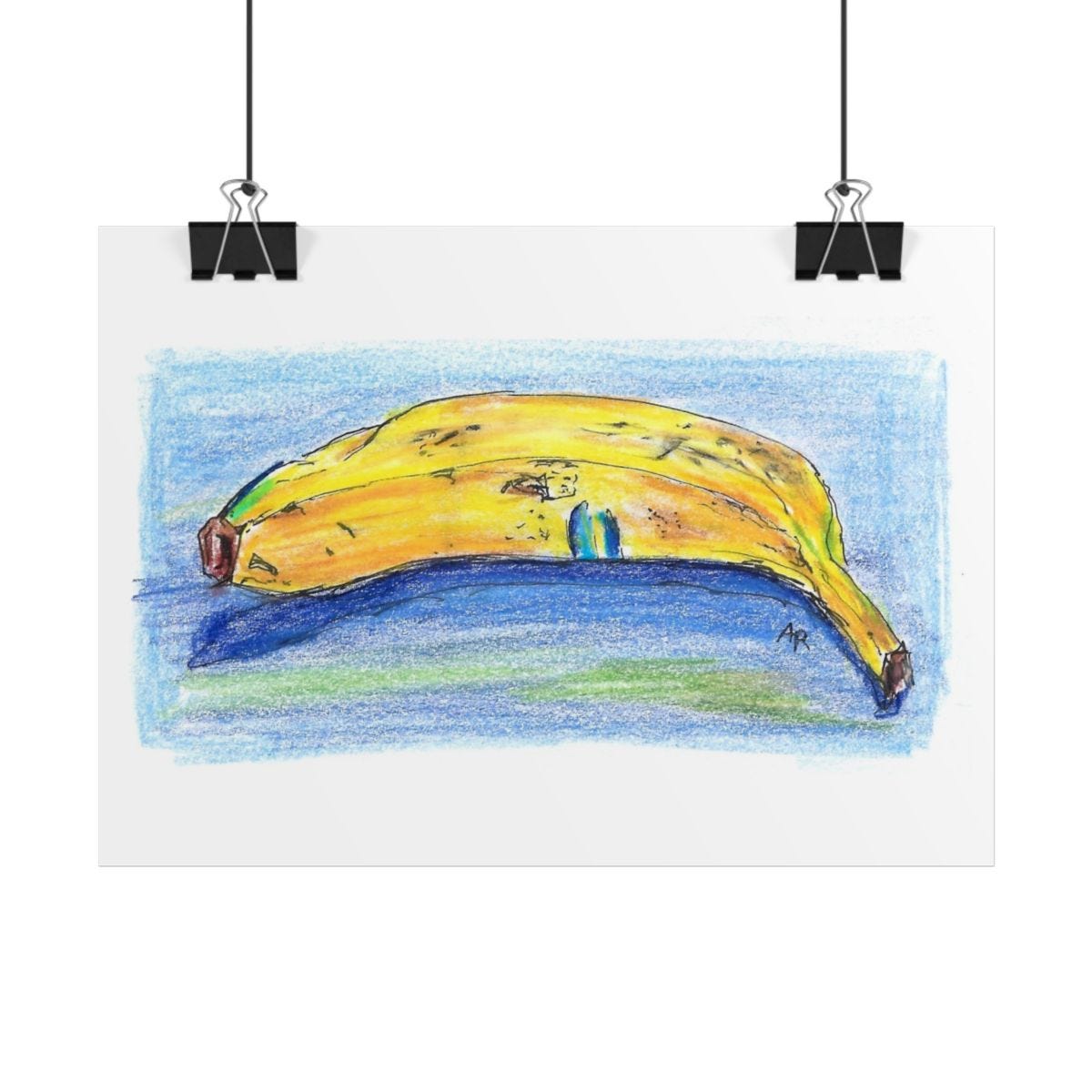
My banana was drawn in my sketchbook in June.
Before sitting down to do a math lesson with my kids, we all drew a banana. It was a fun way to get my drawing and coloring practice in while procrastinating on the math lesson. We were doing geometry proofs.
After sharing it in a Substack note, someone said they’d like to hang “My Banana” on their wall.
Yay! I was super encouraged! And we made it available to order.🥳
You can order it here if you like.
Apricots
As a self-taught artist, some things take time. Things that perhaps, if I had taken a class or two, I would have experimented with a long time ago.
But, as it is, I’m learning as I go.
In this sketchbook, I have been playing with color—background colors, shading choices, etc.
Along the way, I have become more curious about hatching.
So, I’ve tried using hatching in my shadows. (This is the embarrassing bit.)
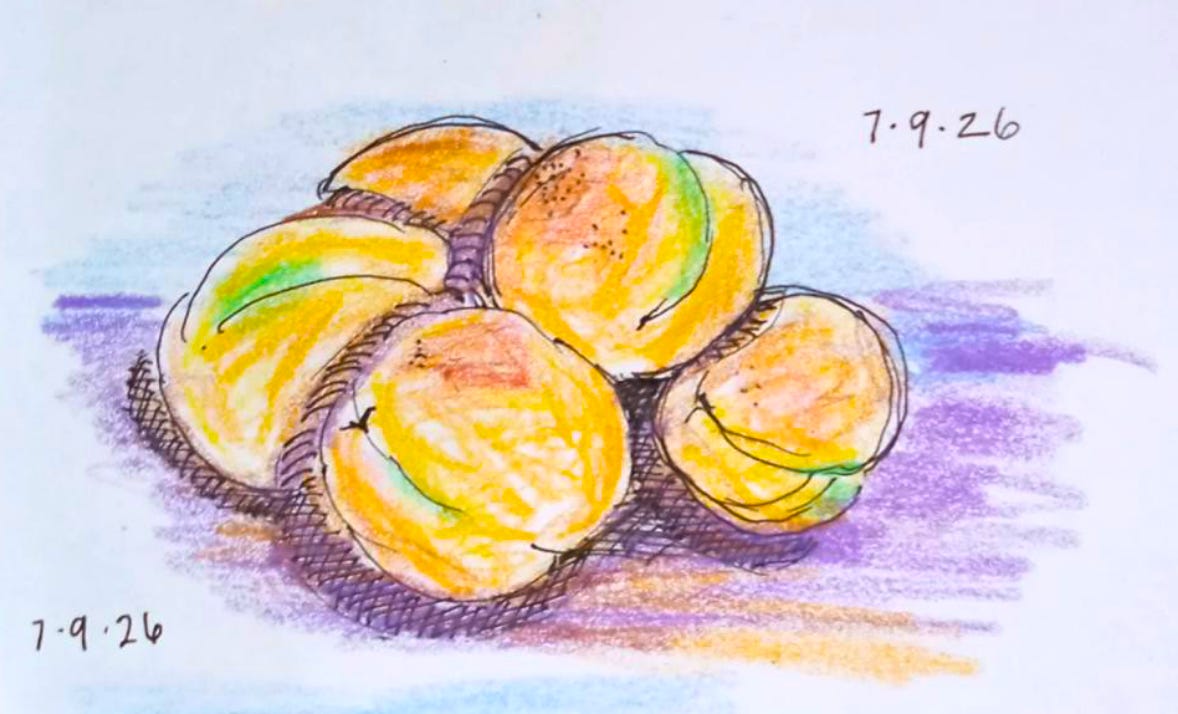
Though I have seen other artists use hatching with colors, I have not found a way to make it work. In the example above, my hatch lines look weird. If I had used colors to create the shadows, I could have achieved a better drawing. But my sketchbook isn’t just about making my best possible drawing; it’s about trying new things and pushing past my current abilities.
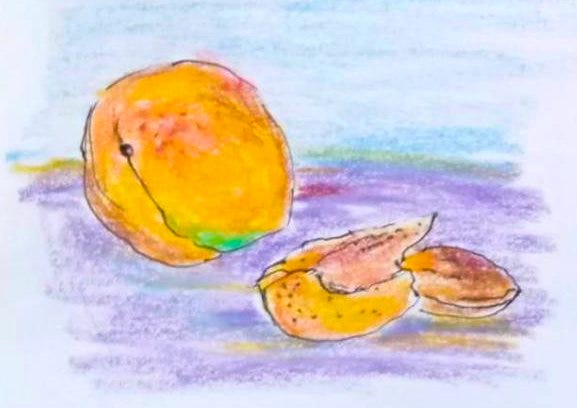
Immediately after coloring this group of apricots (I had eaten most of them, but I still had one and a bit left from which to observe), I noticed that I quite liked my background color choice—blue and purple against orange.
Wanting to redeem my apricots, I drew this.
Hatching Practice
After the embarrassing apricots, I decided to practice hatching. For this, I eliminated coloring.
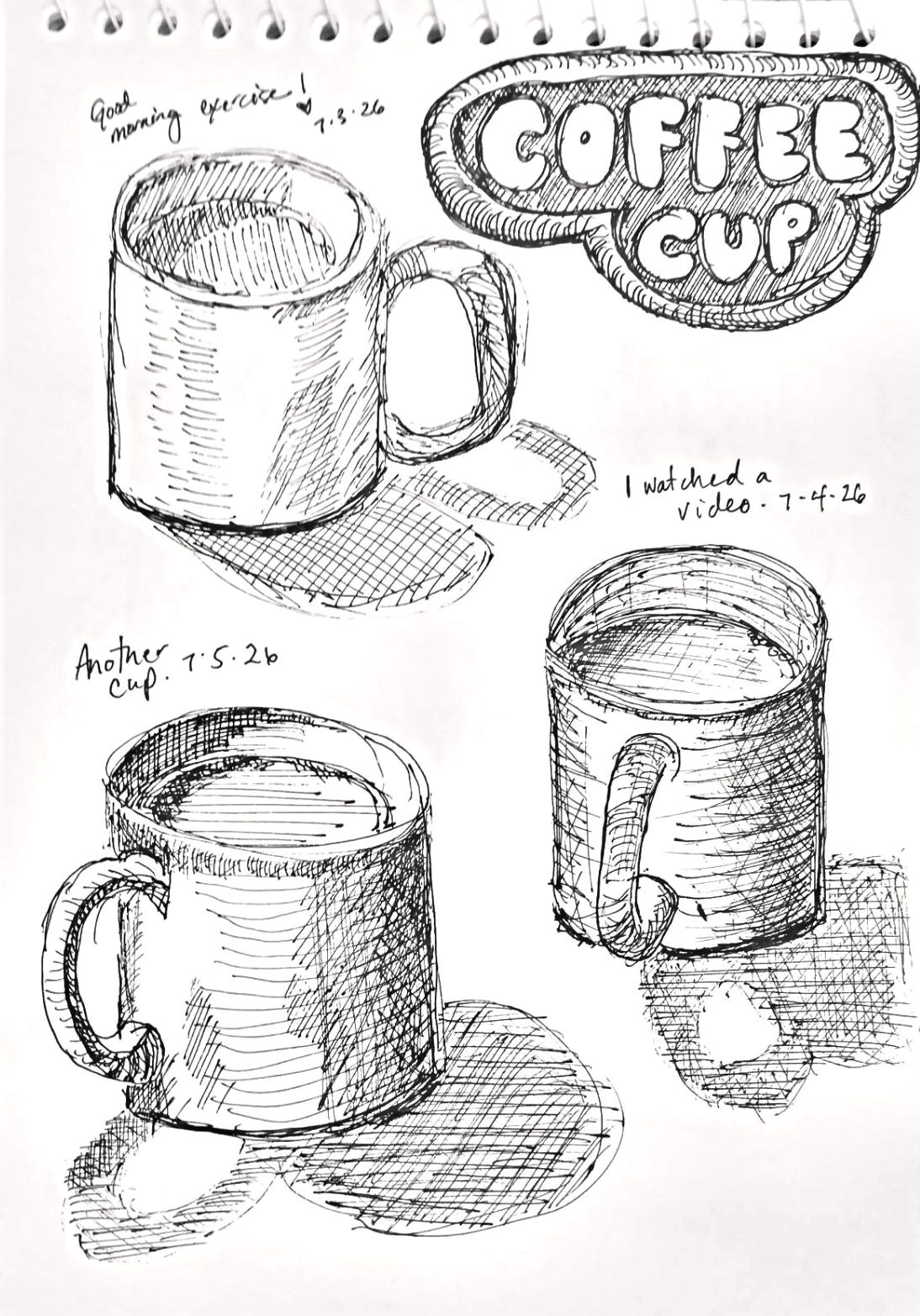
My morning coffee cup was a perfect subject. (So pretty, warm, and inviting.☕️😍)
Day 1: I drew my coffee cup, observed how the light from my nightstand hit the cup, and sketched and hatched it.
Day 2: I watched a very helpful YouTube video and generally followed the approach.
Day 3: Personal style and intuition kicked in.
A mint plant is my current subject for hatching practice. If you follow my Substack notes, you’ll soon see the results.
A Few More Pages...
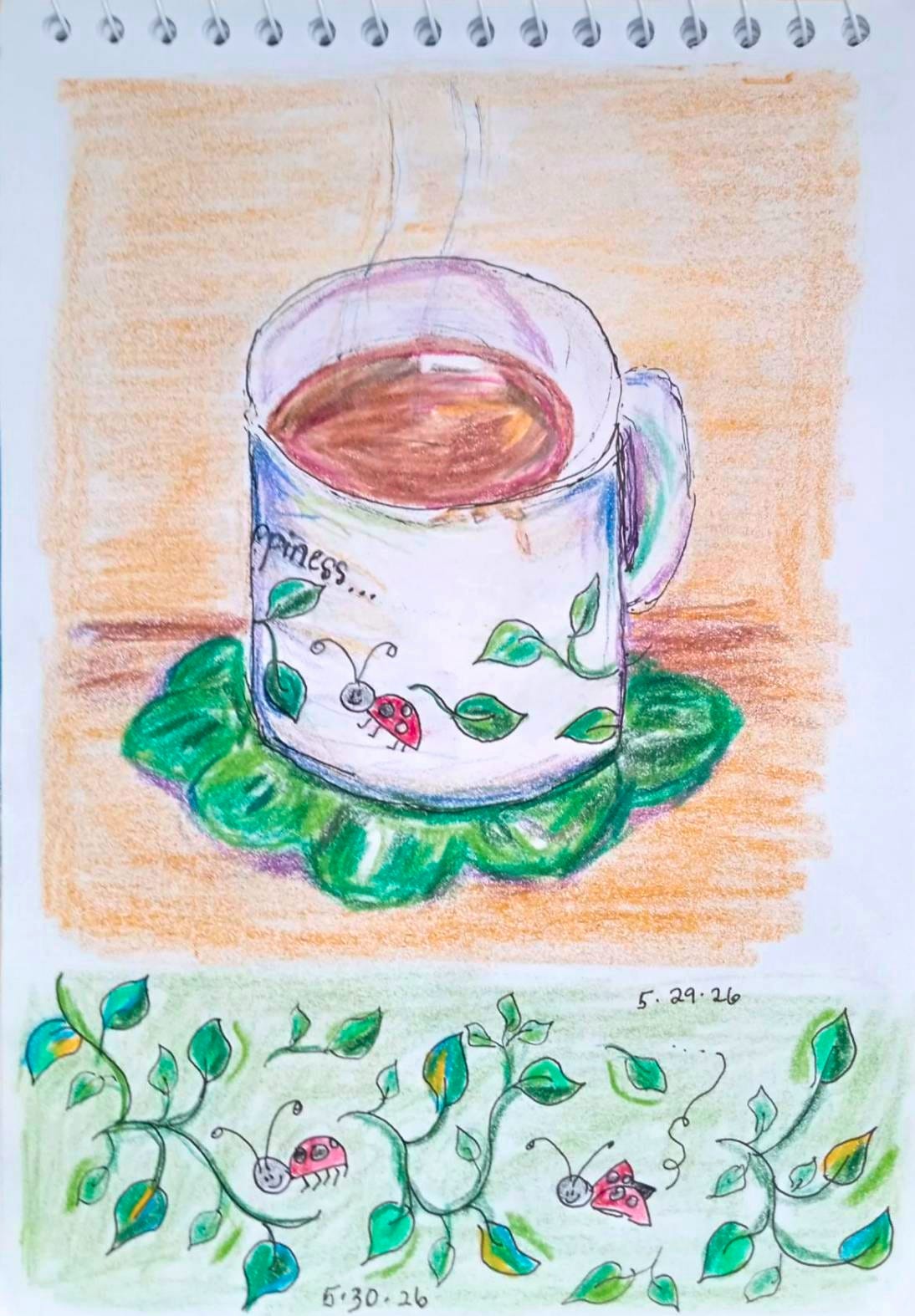
Ladybug Coffee Cup
More Bugs (and Some Flowers)
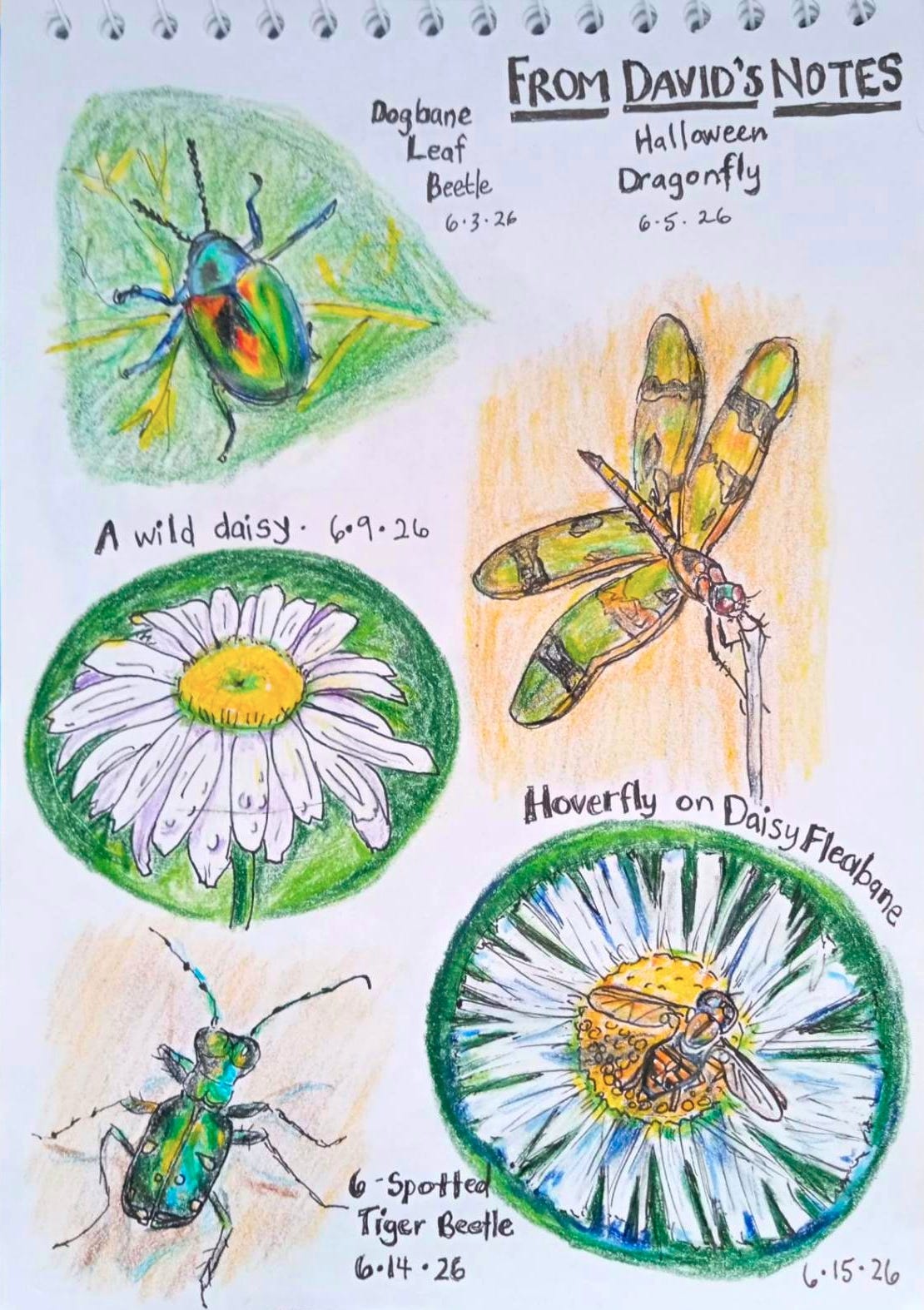
The reference photos for this page were taken from David W Runyan II ’s Substack notes.
And More Flowers For You, Dear Readers
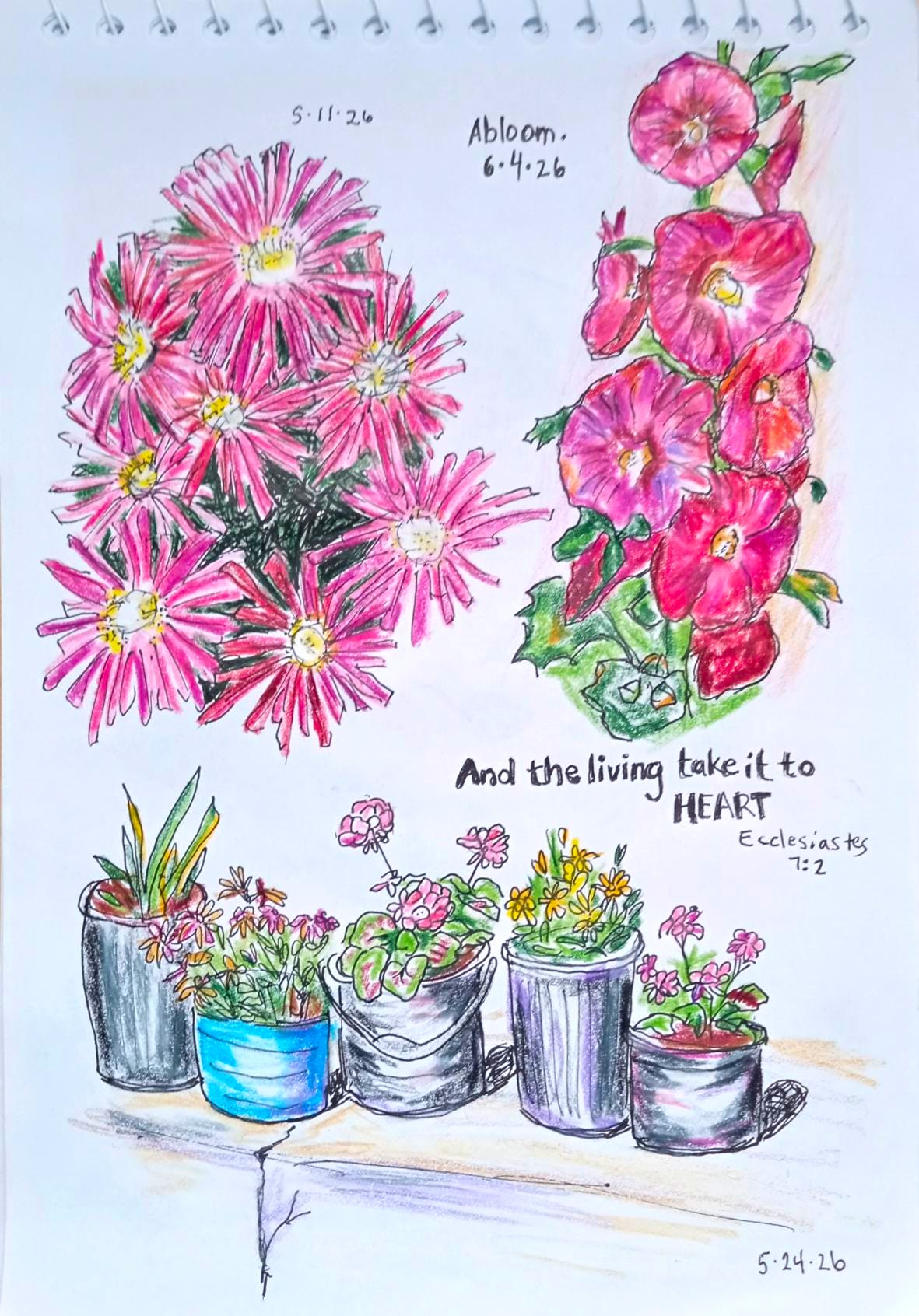
Thank you for joining me in this look inside my sketchbook.
It was fun seeing the goats and the coffee cup drawings.
I like your attitude with your sketchbook and your willingness to share.
Well done!
I just love this peek into your sketchbook practice Amy! 💚